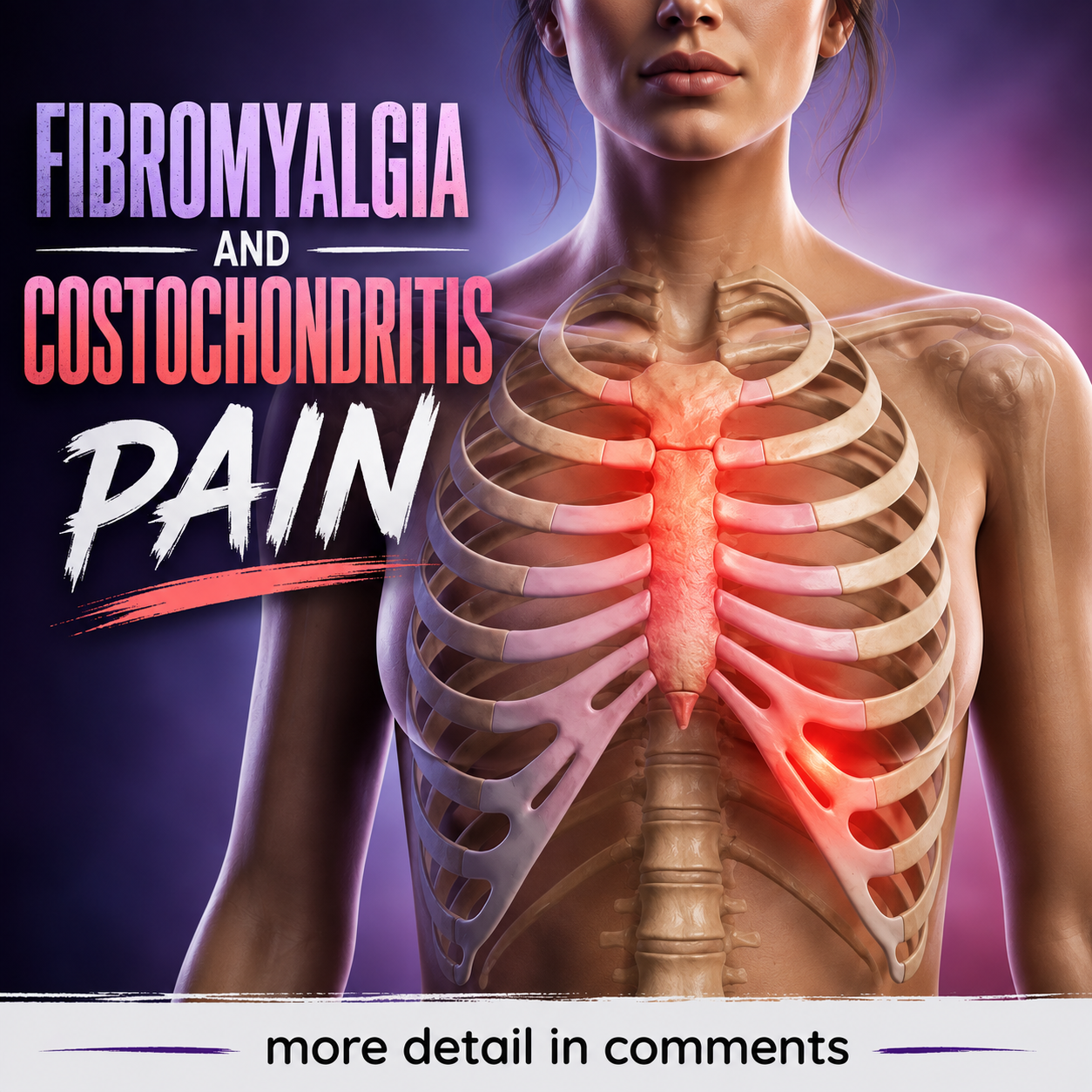
😰 “Fibromyalgia Chest Pain Can Feel SCARY… Here’s Why 💜”
Human Health is a health-tracking platform and does not provide medical advice, diagnosis, or treatment. The information in this article is for general knowledge and is not a substitute for professional medical care. Always consult a qualified healthcare provider about any concerns regarding your health.
Many people with fibromyalgia notice pain in unexpected places, including the ribs and chest. This pain can feel sharp, achy, or tender to the touch, and it often causes extra worry because chest pain is so strongly associated with heart problems.
The good news is that rib and chest pain can occur in fibromyalgia and are often linked to sensitive muscles and nerves in the chest wall, not the heart.
In this guide, you will learn what fibromyalgia rib pain can feel like, when to see a doctor, how conditions such as costochondritis may be involved, and what steps can help you track and cope with symptoms over time.
Fibromyalgia rib & chest pain: Is it normal?
It is understandable to feel uneasy when you notice aching or pressure in your ribs or chest. For some people with fibromyalgia, rib or chest wall discomfort can occur, since fibromyalgia is recognized as a possible cause of musculoskeletal chest pain. This discomfort may come from musculoskeletal sensitivity in the chest wall rather than from the heart or lungs.
Still, it is important to remember that if chest pain feels new, sudden, severe, or comes with symptoms such as shortness of breath or dizziness, you should seek medical help right away.
What does fibromyalgia rib pain feel like?
People with fibromyalgia who experience rib or chest pain may describe it as a dull ache, tenderness to touch, or a squeezing feeling across the chest. For some, it can feel sharp with movement, stretching, or deep breathing.
What are the possible causes of fibromyalgia rib & chest pain?
Rib and chest pain in fibromyalgia can show up as part of a flare-up, when the body’s pain pathways become more sensitive. It may also be linked to everyday triggers or overlapping conditions that affect the chest wall.
#1: Central sensitization during flares
Fibromyalgia is tied to heightened pain sensitivity in the nervous system. During flare-ups, this sensitivity can amplify discomfort in muscles and soft tissues around the ribs and chest, making pain feel sharper or more widespread.
#2: Muscle tension and posture
Holding the body in awkward positions, hunching forward, or muscle strain can place extra stress on the chest wall. For people with fibromyalgia, these postural issues may trigger or worsen rib pain because the muscles are already sensitive.
#3: Stress and poor sleep
Stress and disrupted sleep are well-known triggers in fibromyalgia. Both can lower pain tolerance and heighten sensitivity, which may make rib or chest pain more noticeable during stressful periods or after nights of poor rest.
The possible connection between costochondritis and fibromyalgia
Chest wall pain in fibromyalgia is sometimes linked to costochondritis, an inflammation of the cartilage where the ribs meet the breastbone. Because both conditions can cause chest wall pain, it’s easy to confuse the two without medical evaluation.
Is costochondritis the same as fibromyalgia?
No. Fibromyalgia is a chronic pain condition that affects how the nervous system processes pain throughout the body, while costochondritis is a local inflammation in the rib cartilage. Both conditions may lead to chest discomfort, though for different reasons: fibro through pain sensitivity, and costochondritis through local inflammation.
How is costochondritis diagnosed?
Doctors usually diagnose costochondritis by pressing on the chest to see if pain is reproducible in specific spots. This helps distinguish it from heart- or lung-related causes. Sometimes, tests such as imaging or blood work are ordered to rule out other possibilities.
Can fibromyalgia make costochondritis feel worse?
Fibromyalgia doesn’t cause costochondritis, but its heightened pain sensitivity can make inflammation feel more intense. This overlap often blurs the lines between the two, making it harder to know which condition is responsible without professional input.
Other conditions that may cause rib or chest pain
Although fibromyalgia can contribute to rib or chest wall discomfort, it is not always the only reason. Other conditions may produce similar symptoms, which sometimes makes it hard to know if the pain is fibro-related or something else.
1. Acid reflux (GERD)
GERD may cause a burning sensation in the chest (heartburn), often worse after eating or when lying down. Because fibromyalgia chest pain can also feel persistent, it is easy to mistake acid reflux for a flare.

2. Muscle strain
Chest pain may also come from strained chest muscles after lifting, coughing, or awkward movement. This discomfort is usually sharp with movement or touch and may ease with rest, though it can feel worrying when mistaken for fibro pain.
3. Costochondritis
Costochondritis is inflammation of the cartilage where the ribs meet the breastbone. It often produces sharp, localized pain that may resemble fibromyalgia chest pain. Tenderness to touch is a common clue.
4. Respiratory infections
Colds, flu, or other infections may irritate the lungs or chest wall and cause soreness. This pain may worsen when coughing or breathing deeply, which can feel different from fibromyalgia but still confusing when both occur.
5. Pneumonia or pleurisy
More serious infections, such as pneumonia or pleurisy (inflammation of the lung lining), may cause sharp chest pain that worsens with deep breaths. These conditions require prompt medical evaluation.
7. Gallbladder issues
Pain from gallbladder problems often begins in the upper right abdomen but may radiate toward the ribs or chest. Because the discomfort can mimic fibro or chest wall pain, evaluation is needed to confirm the cause.
Important: Always treat new, intense, or unexplained chest pain as an urgent concern until a healthcare professional rules out serious causes.