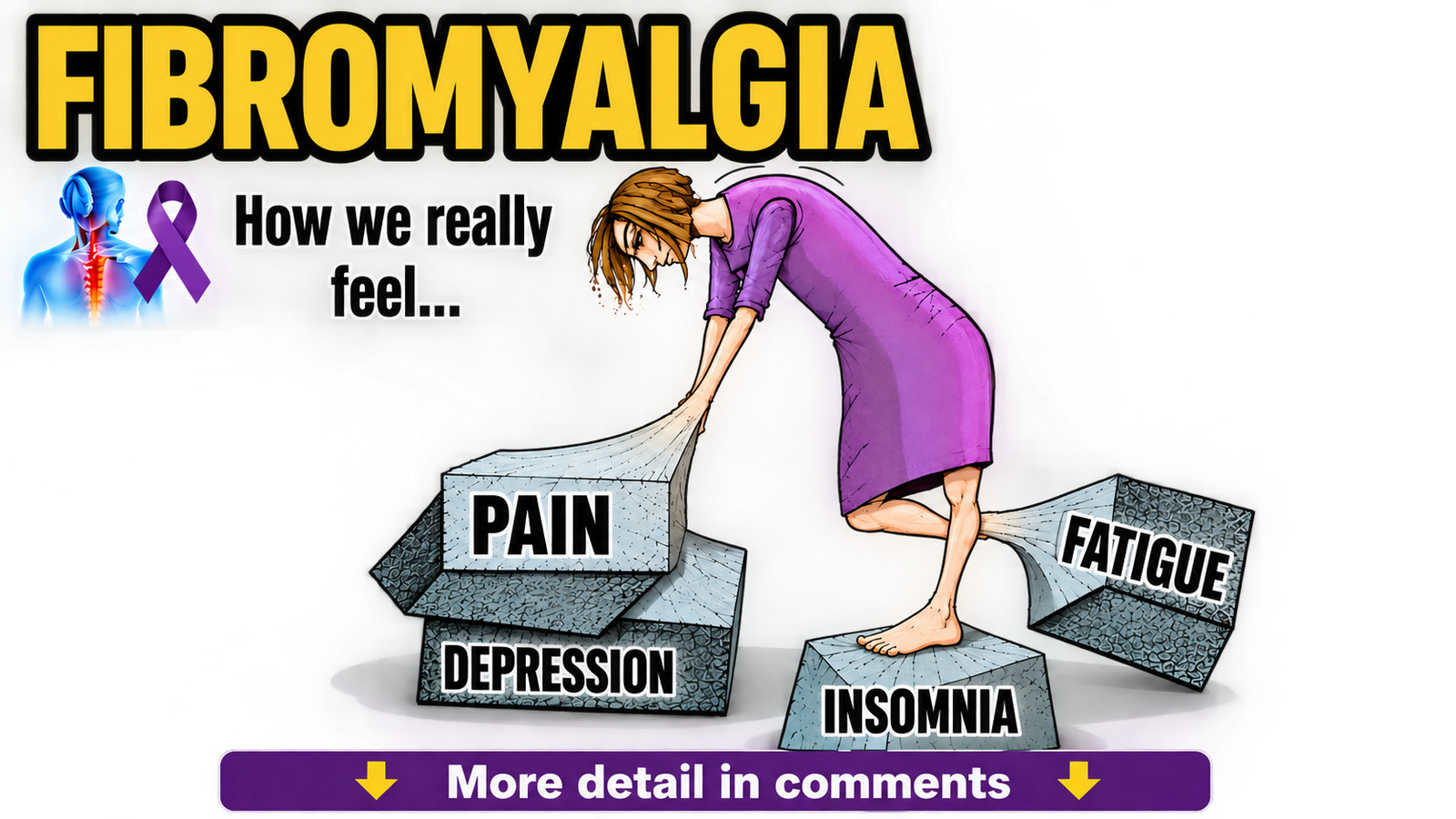
Fibromyalgia: The Invisible Pain Behind the Smile

Living With Fibromyalgia: The Reality Behind the Invisible Pain
Living with fibromyalgia is about far more than pain. It can affect the way you sleep, think, work, move, socialize, and experience everyday life. For someone living with this condition, even ordinary activities can sometimes require an extraordinary amount of energy.
What makes fibromyalgia particularly difficult is its unpredictability. One day, you may have enough energy to complete your normal routine. The next, getting out of bed may feel like an achievement. Symptoms can change from one day to another, making it difficult to know what your body will allow you to do.
And because many of the symptoms are invisible, people with fibromyalgia are often misunderstood.
What Is It Really Like to Live With Fibromyalgia?
Fibromyalgia is a chronic condition associated with widespread pain and increased sensitivity to pain. It can also involve fatigue, sleep problems, cognitive difficulties, and a variety of other symptoms.
The experience is different for everyone.
Some people describe their pain as a deep, constant ache. Others experience burning, throbbing, stiffness, tenderness, or occasional sharp and shooting sensations. The discomfort may move from one area of the body to another rather than remaining in one place.
Pain may be experienced in areas such as the:
- Neck and shoulders
- Upper and lower back
- Arms and hands
- Hips and thighs
- Legs and knees
- Feet
- Chest and rib area
The intensity can also fluctuate. Symptoms that feel manageable in the morning may become much more difficult later in the day.
The Pain Is Real — Even When You Cannot See It
Perhaps one of the most painful parts of fibromyalgia is not always the physical pain.
It is being told — directly or indirectly — that you look healthy, so you must be fine.
A person with fibromyalgia may look completely normal while dealing with significant pain, exhaustion, poor sleep, or difficulty concentrating.
There may be no visible swelling, cast, wound, or other obvious sign that something is wrong.
That does not mean the symptoms are imaginary.
Invisible does not mean unreal.
For many people, simply having their symptoms believed and understood can make living with a chronic condition feel less isolating.
Fibromyalgia Fatigue: When Rest Doesn’t Feel Restful
Fibromyalgia-related fatigue can be much more than feeling tired after a busy day.
You may sleep for hours and still wake up feeling as though you have barely rested.
Simple activities can consume a surprising amount of energy. Taking a shower, preparing food, cleaning the house, going shopping, or attending an appointment may leave you needing significant recovery time.
This can be especially frustrating for people who remember being able to accomplish these things easily in the past.
The challenge is not always a lack of motivation.
Sometimes, the energy simply isn’t there.
Understanding “Fibro Fog”
Another commonly reported symptom is cognitive difficulty, often called fibro fog.
It may feel like your brain is working more slowly than usual.
You might:
- Forget a word during a conversation
- Walk into a room and forget why you went there
- Struggle to concentrate on a task
- Lose your train of thought
- Have difficulty remembering appointments
- Find multitasking overwhelming
- Need more time to process information
For someone experiencing fibro fog, these moments can be embarrassing or frustrating.
It is important to remember that difficulty concentrating does not mean a person is unintelligent or incapable.
Sleep and Fibromyalgia: A Difficult Cycle
Sleep and fibromyalgia can be closely connected.
Pain may make it difficult to fall asleep or stay asleep. Poor-quality sleep can then leave you feeling exhausted the following day. Increased fatigue and stress may make coping with pain even more difficult.
This can create a frustrating cycle:
Pain → disrupted sleep → fatigue → reduced activity and increased stress → greater difficulty managing symptoms.
Improving sleep quality can therefore be an important part of an overall fibromyalgia management plan.
The Emotional Weight of Chronic Pain
Living with symptoms every day can affect emotional well-being.
There may be frustration when you have to cancel plans. Anxiety can arise when you do not know how you will feel tomorrow. You may miss activities that were once an important part of your life.
Some people also struggle with guilt.
They may feel guilty for asking for help, resting instead of working, missing social events, or being unable to meet expectations.
But needing to change your routine does not mean you are weak.
Chronic illness requires adaptation, not shame.
Learning to recognize your limitations and communicate them to others can be an important part of taking care of yourself.
When Everyday Sensations Become Overwhelming
Some people with fibromyalgia experience increased sensitivity to sensory stimuli.
Light, noise, touch, temperature changes, or other environmental factors may sometimes feel more intense than expected.
A busy shopping center, loud conversation, bright screen, uncomfortable clothing, or unexpected touch can become difficult to tolerate.
These experiences can be hard for others to understand because the same environment may feel completely normal to them.
Why “Pushing Through” Isn’t Always the Answer
People with chronic pain are sometimes told to simply push through their symptoms.
But fibromyalgia can make this approach counterproductive.
Doing too much on a good day may leave someone struggling for much longer afterward. This is why learning to balance activity and rest can be valuable.
One strategy commonly discussed in chronic illness management is pacing.
Pacing means learning how much activity your body can reasonably tolerate and breaking demanding tasks into manageable portions.
For example:
- Divide large tasks into smaller steps.
- Take planned breaks before you become completely exhausted.
- Prioritize the most important activities.
- Avoid trying to complete everything on a good day.
- Alternate demanding activities with easier ones.
- Give yourself recovery time when needed.
The goal is not to become inactive.
The goal is to find a level of activity that is sustainable for your body.
Gentle Movement May Still Matter
Physical activity can be challenging when you live with chronic pain, but complete inactivity may not always be helpful either.
Depending on the individual, healthcare professionals may recommend gradual, low-impact activities such as walking, stretching, water-based exercise, or other forms of gentle movement.
The key is personalization.
What works for one person may be too much — or not enough — for someone else. If exercise consistently causes significant worsening of symptoms, discussing your activity level with a healthcare professional can help you find a safer and more sustainable approach.
Learning to Listen to Your Body
One of the most important skills a person with fibromyalgia can develop is learning to recognize what their body is telling them.
Instead of asking:
“How much can I force myself to do?”
it may be more helpful to ask:
“What can I do today without making tomorrow harder?”
That change in mindset can be powerful.
Your body is not failing because it needs rest.
Rest is not laziness.
Asking for help is not weakness.
And having a difficult day does not erase the progress you made yesterday.
Building a Support System
Fibromyalgia can sometimes feel lonely, particularly when people around you do not understand what you are experiencing.
Family members, friends, coworkers, and caregivers may need time and information to understand why your abilities can change from day to day.
Clear communication can help.
Instead of simply saying, “I don’t feel well,” you may find it useful to explain what you need — whether that means more time, a quieter environment, help with a task, or permission to rest.
Support communities can also provide an important sense of connection. Talking with other people who live with chronic pain can help reduce the feeling that you are facing everything alone.
There Is No One-Size-Fits-All Approach
Fibromyalgia does not look exactly the same in every person.
Symptoms, triggers, severity, and treatment responses can vary significantly. For this reason, management is often individualized.
Depending on a person’s symptoms and overall health, a healthcare professional may discuss approaches involving physical activity, sleep habits, stress management, psychological support, medications, and treatment of other conditions that may contribute to symptoms.
Keeping a simple symptom diary may also help identify patterns.
You could record:
- Pain levels
- Sleep quality
- Energy levels
- Physical activity
- Stress
- Major symptoms
- Potential triggers
Over time, these observations may help you and your healthcare professional understand what tends to make your symptoms better or worse.
When Should You Talk to a Doctor?
If you have persistent widespread pain, unexplained fatigue, sleep problems, or ongoing difficulties with concentration, it is important to speak with a healthcare professional.
You should also seek medical advice if your symptoms change significantly, become unusually severe, or begin interfering substantially with your daily life.
It is important not to assume that every new symptom is caused by fibromyalgia. Other medical conditions can cause pain, fatigue, sleep problems, or cognitive symptoms, so new or concerning symptoms deserve appropriate evaluation.
Seek urgent medical attention for sudden or severe chest pain, difficulty breathing, fainting, or other potentially serious symptoms.
Fibromyalgia Does Not Define You
Perhaps the most important thing to remember is this:
You are more than your diagnosis.
Fibromyalgia may change the way you plan your days. It may force you to slow down, change priorities, ask for help, or let go of expectations that once seemed easy.
But your condition does not determine your value.
A short walk can be a victory.
Getting through a difficult workday can be a victory.
Taking a shower when you have no energy can be a victory.
Saying “no” because your body needs rest can be a victory.
And waking up tomorrow and trying again can be a victory too.
Final Thoughts
Living with fibromyalgia can mean living with uncertainty. Some days may be relatively manageable, while others can be dominated by pain, fatigue, poor sleep, or brain fog.
The condition may not always be visible to the people around you, but the experience is real.
Managing fibromyalgia is not about pretending that everything is normal. It is about learning your body’s limits, finding strategies that work for you, accepting support, and giving yourself the same compassion you would give to someone else living with chronic pain.
You do not have to accomplish everything every day.
You do not have to prove that you are strong by ignoring your symptoms.
Sometimes strength means slowing down.
Sometimes strength means asking for help.
And sometimes strength simply means continuing forward, one day at a time.
Fibromyalgia is part of your story — but it is not the whole story.
Frequently Asked Questions About Living With Fibromyalgia
Can fibromyalgia pain affect the whole body?
Yes. Fibromyalgia is associated with widespread pain, and symptoms may be experienced in multiple areas of the body. The location and intensity of pain can vary from person to person and may change over time.
Why am I still tired after sleeping?
People with fibromyalgia may experience unrefreshing sleep, meaning they can spend adequate time sleeping but still wake feeling exhausted. Sleep quality, pain, and other symptoms can all contribute to daytime fatigue.
What is fibro fog?
“Fibro fog” is a term commonly used by people with fibromyalgia to describe problems such as forgetfulness, difficulty concentrating, slower thinking, and trouble finding words.
Can stress make fibromyalgia symptoms worse?
Stress can affect pain perception, sleep, energy, and overall well-being. Some people notice that periods of increased stress coincide with worsening symptoms, although triggers vary between individuals.
Is fibromyalgia curable?
There is currently no universally accepted cure for fibromyalgia. However, symptoms can often be managed through an individualized treatment and self-management plan developed with healthcare professionals.
Can exercise help fibromyalgia?
For some people, appropriately paced and gradual physical activity can be helpful. The best type and intensity of activity depend on the individual, so it is important to avoid overexertion and discuss an exercise plan with a qualified healthcare professional when needed.
What is the most important thing to remember about fibromyalgia?
Your symptoms are real, even when other people cannot see them. Managing a chronic condition requires patience, flexibility, support, and self-compassion.
You are not weak because you need rest. You are not lazy because your energy is limited. And you are not alone.